
Many yoga teachers burn out because they open their doors to everyone without any discernment.
“Everybody welcome. Drop in whenever you want. Pay a single class. Come and go as you please.”
But think about it for a moment — which serious school, in any discipline, has ever functioned like
this?
In this model, the teacher is no longer choosing their students.
The teacher is waiting to be chosen, accepting whoever walks through the door.
And when you do that, you simply get whatever comes.
This damages the teacher, the students, and the class itself.
A learning space needs continuity, commitment, and mutual respect. Without that, it becomes
unstable and exhausting for everyone involved.
For eight years I have run my school on my own, without collaborations or external support. It
began in Montreux, where most students didn’t even come from the town itself but from
surrounding areas. Now it continues in Vevey, a town of 26,000 people, where sometimes people
think taking a 20-minute bus ride from the next village is already “too far.”
And yet the school continues.
How is that possible?
Because I value myself and what I offer. Just as my students choose to practice with me, I also
choose the students I work with.
That discernment is what allows me to maintain my own advanced practice, keep classes running
consistently, manage the administration of a school, offer therapy work, and continue studying and
refining my craft.
A teacher must protect their energy and be conscious of where and with whom it is invested.
The fastest way to burn out is to pour your energy into people who do not value it, are not ready to
receive it, or have no understanding of what they are being given.
Your attention is a gift.
Your knowledge is a gift.
Your experience and wisdom are gifts.
Do not pour them carelessly everywhere.
Do not pour your energy into soil that is not ready to receive it.
And do not keep pouring into the hands of those who disrespect the very fountain they drink from.
Choose the people you work with.
Not everyone is ready for what you offer — and that is perfectly fine.
A teacher must remember that discernment protects the teaching, the committed students who show
up with genuine interest, the energy of the space, and the teacher.Your role is to protect the collective well-being — not your pocket. Accepting whoever walks in
simply because they are willing to pay inevitably degrades the quality of the space.
This has been the success of my work and my school.
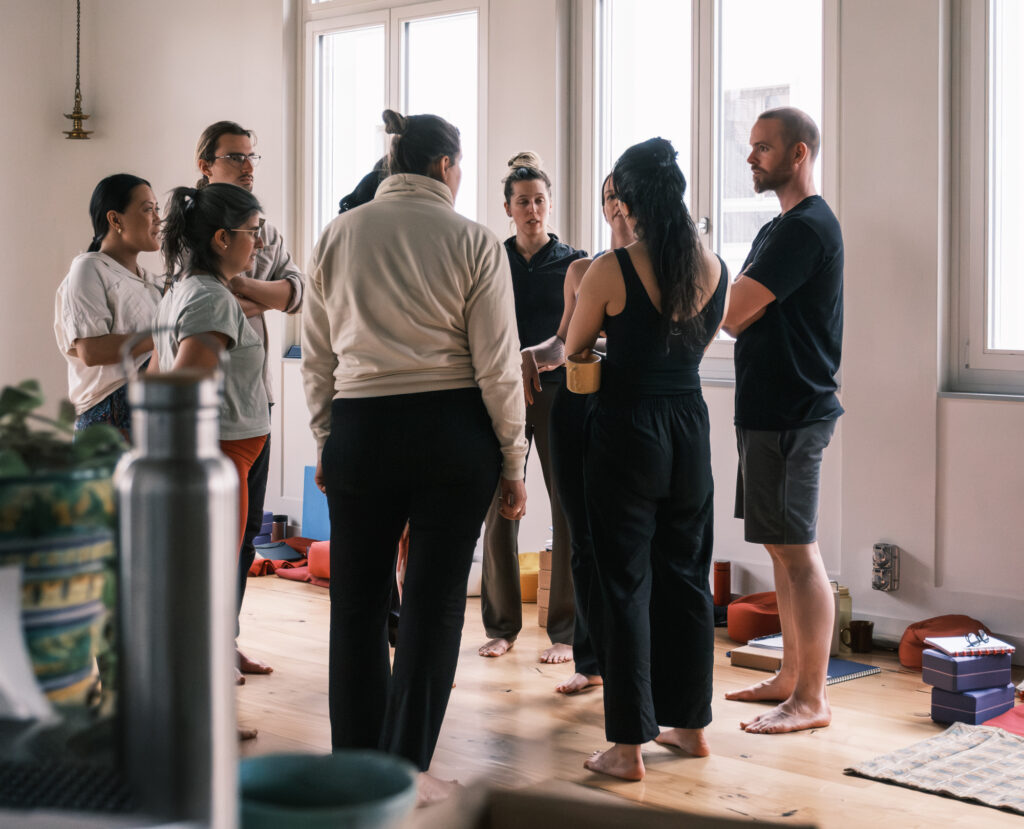
The people who practice here enjoy coming because the space is protected from constant distraction
and from a random flow of people coming and going without commitment.
Over time, most students come to know each other because they become regular practitioners.
Many remain for years. Slowly, through practice and shared effort, a sense of community forms.
They may not all be close friends, but they become members of a community that recognizes one
another, respects one another, and has each other’s back.
The reality is that when you work this way your school grows naturally — slowly, but steadily. It
becomes financially sustainable without the teacher burning themselves out trying to accommodate
everyone.
Discernment protects the teaching.
Discernment protects the students.
And discernment protects the teacher.