Rolfing®
Rolfing® Si & Yoga
What is Rolfing® Structural Integration?
Rolfing Structural Integration is a form of hands-on manipulation and movement education developed by Dr. Ida P. Rolf over 50 years ago. It works on the web-like network of connective tissues, called fascia, to release, realign, and balance the whole body, potentially:
- Resolving discomfort
- Reducing compensations
- Alleviating pain
Rolfing aims to restore flexibility, revitalize energy, and leave you feeling more comfortable in your body. It may also enhance your posture and freedom of movement.
Dr. Ida Rolf, influenced by Hatha Yoga, researched and practiced yoga to alleviate her own back pain from scoliosis. Her experience contributed to the evolution of Rolfing principles, aligning them with yoga goals of enriching body, mind, and spirit through structural balance.
Many yoga practitioners now seek Rolfing to:
- Improve performance in their practice
- Gain a better understanding of how their body functions
Since Rolfing eases movement, it makes asana practice easier and accelerates creating space and length in stiff bodies. It can also help regain flexibility lost due to age, injury, or inactivity.
Rolfing’s influence on alignment and posture helps those aiming for advanced yoga poses and encourages moving with greater awareness.
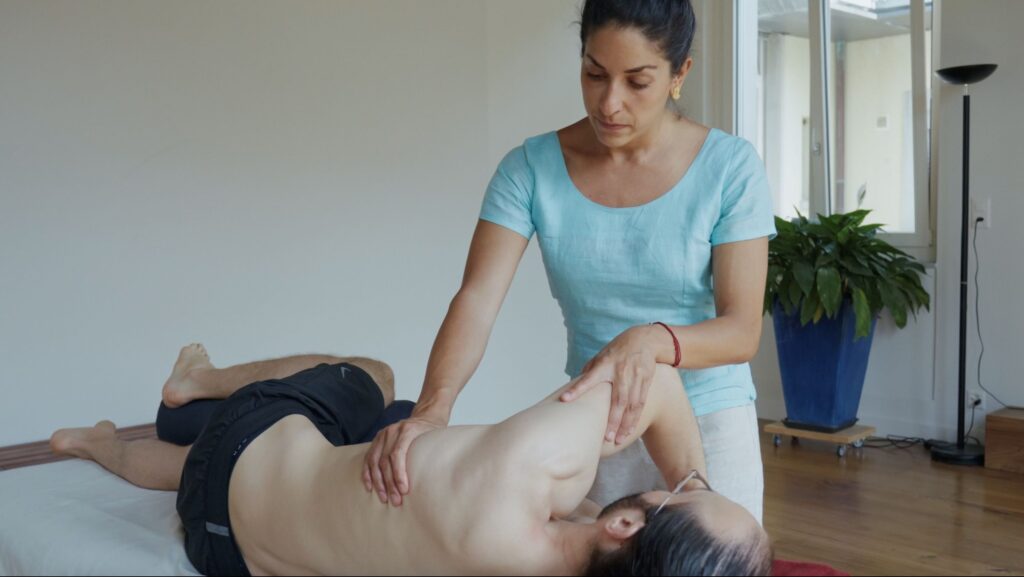
Rolfing Can Give You a Deeper Understanding and a Chance to Explore:
- Movement patterns that lead to tension and asymmetry in the body, explored together with the client
- How to move more ergonomically – improving balance and efficiency in relation to gravity
- How to engage Mula Bandha and Udiyana Bandha naturally, by connecting the medial arch of the foot to the pelvic floor, rather than squeezing the abdomen or pelvic floor
- Balance between Trapezius and Serratus Anterior to safely perform arm-balancing asanas and Chaturanga (plank position)
- Efficient belly and thoracic breathing
- Expanding 3-dimensionally in every asana, engaging the core naturally
- Coordinating body parts and moving with consciousness and intention to bring ease into movement
How is Rolfing® Different From Other Techniques?
Most massage techniques focus on treating specific issues, addressing only the symptoms presented. These corrective practices often overlook:
- How the whole body is integrated in gravity
- How local interventions affect the entire system
Rolfing takes an integrative approach, understanding how structural organization affects:
- Body function and movement
- Movement patterns
- Emotional trauma
During the 10-session Rolfing process, a Rolfer and client may work together to release trauma, suppressed emotions, and limiting worldviews.