Rolfing® Structural Integration
What is Rolfing® Structural Integration?
Rolfing® Structural Integration is a form of hands-on bodywork and movement education developed by Dr. Ida P. Rolf. It works with fascia, the continuous network of connective tissue that surrounds and connects the muscles, bones, nerves and organs and with the way the whole body organises itself in relation to gravity.
Through precise touch, movement and sensory awareness, Rolfing explores the relationships between different areas of the body rather than focusing only on the place where discomfort appears. The work aims to reduce unnecessary tension and compensation, improve structural balance and support greater ease, adaptability and freedom of movement.
My approach is also informed by my study of Neijing Chinese Medicine, which broadens how I understand each person’s physical condition. Musculoskeletal pain does not exist separately from the rest of one’s health. Digestion, menstruation and hormonal cycles, autoimmune conditions, sleep, stress, energy levels and lifestyle can all influence muscular tone, tissue sensitivity, recovery and the way pain is perceived.
Bringing these complementary perspectives together allows me to work with the body as an interconnected whole, considering not only the breath, fascia, joints and posture, but also the broader health patterns that may be contributing to tension and imbalance.
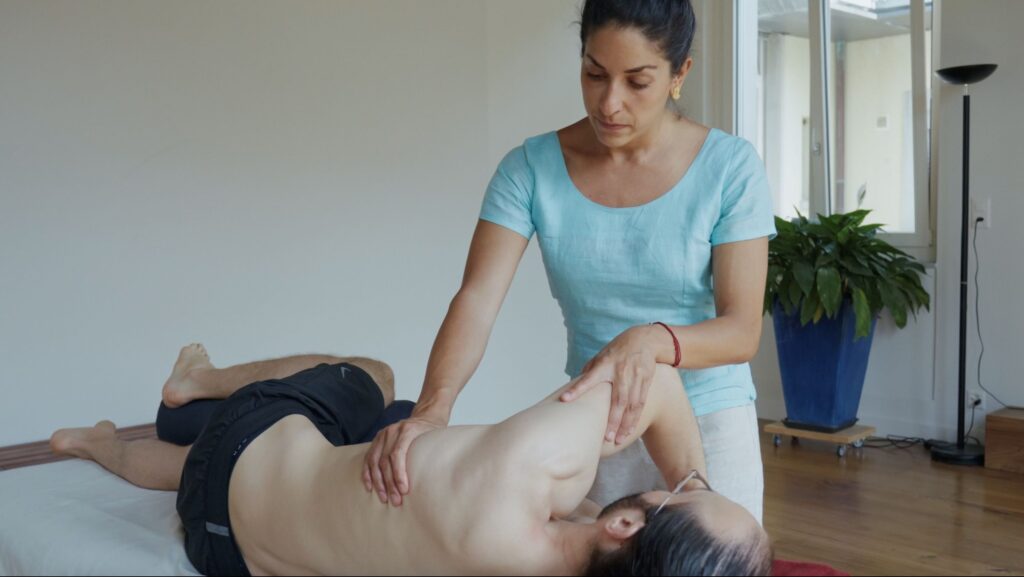
People seek Rolfing® Structural Integration Therapy for:
- Chronic pain and tension: persistent back, neck, shoulder or joint discomfort, including nerve-related or radiating pain
- Restricted mobility: stiffness, frozen shoulder, reduced range of motion and physical limitations following injury or inactivity.
- Tendinopathies and repetitive strain: including rotator-cuff irritation, tennis or golfer’s elbow, Achilles or patellar tendinopathy, plantar fasciitis and carpal tunnel symptoms.
- Postural and structural patterns: scoliosis, pronounced lordosis or kyphosis, postural strain, flat feet or rigid high arches.
- Injury and surgical rehabilitation: preparation before surgery to support recovery and improve outcomes; post-surgical work directly addressing scar tissue and surrounding restrictions, restoring mobility and strength, and reintegrating the affected area into the body’s natural movement and function.
- Caesarean-section and mastectomy scars: work addressing scar tissue and surrounding restrictions following these procedures.
- Changes in body awareness and muscular tone: excessive tension, low tone, heightened bodily sensitivity or difficulty sensing the body’s position and movement.
- Postpartum recovery: supporting a return to a comfortable, balanced axis after the adaptations of pregnancy and the demands of breastfeeding and carrying a baby; exploring changes in posture, breathing and movement, and reconnecting with awareness of the pelvis and pelvic floor.
- Stress and chronic holding patterns: difficulty relaxing or feeling at ease and supported in the body.
- Movement and performance: improving balance, coordination and movement efficiency in daily life, sport, yoga or dance.
Practical Information
Location
Casa Vinyasa, Vevey
Adult sessions
75 minutes — CHF 180
Sessions for babies and children
15–30 minutes, adapted according to the child’s age and needs.
Payment
TWINT or cash at the end of each session.
Health-insurance reimbursement
Treatments are reimbuerrsed by Swiss complementary health insuranse. The amount reimbursed varies according to your insurer and individual policy. Please confirm your coverage directly with your insurance provider before beginning treatment.
What to wear
Please bring comfortable clothing or underwear in which you feel at ease being observed and treated. Avoid tight sport bras.